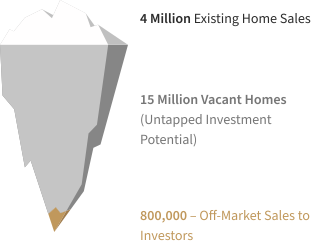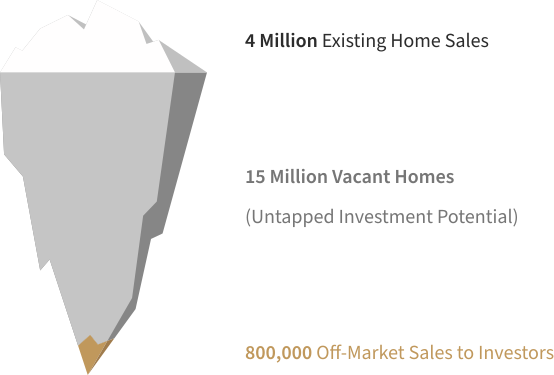



America’s affordability crisis is not driven by a lack of units, but a lack of usable homes.
The most critically needed housing in the market is the starter home.
Local investors are now the primary force delivering starter-home inventory.
Builders remain essential — but they primarily deliver step-up housing.
Starter homes are the lynchpin of the entire housing ecosystem.
Revitalization strengthens the broader housing economy.
Affordability is increasingly being addressed through the Great Renovation.
Housing remains central to the American middle class and the American Dream.
Housing is more than a market. It is a foundation of American life.
Homeownership has historically been one of the most powerful drivers of wealth creation and stability for middle-income households. It influences where families live, where children attend school, how communities develop, and whether people feel invested in their neighborhoods.
That is why real estate dominates headlines and policy conversations, especially during periods of affordability strain.
But the housing conversation often becomes oversimplified. The focus shifts to politics instead of structure and mechanics.
To understand what is happening in housing today, we have to start with a simple question: Not who is to blame, but how the system actually works.
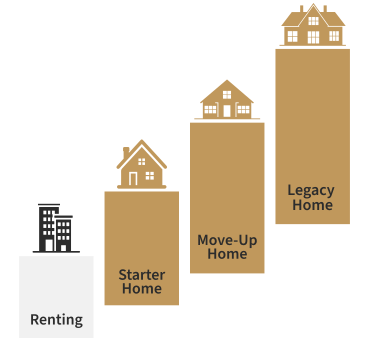
The housing market is often discussed in terms of prices and rates. In reality, it functions as a ladder made up of distinct segments.
Most households move through predictable stages: renting, starter home, move-up home and a long-term/legacy home.
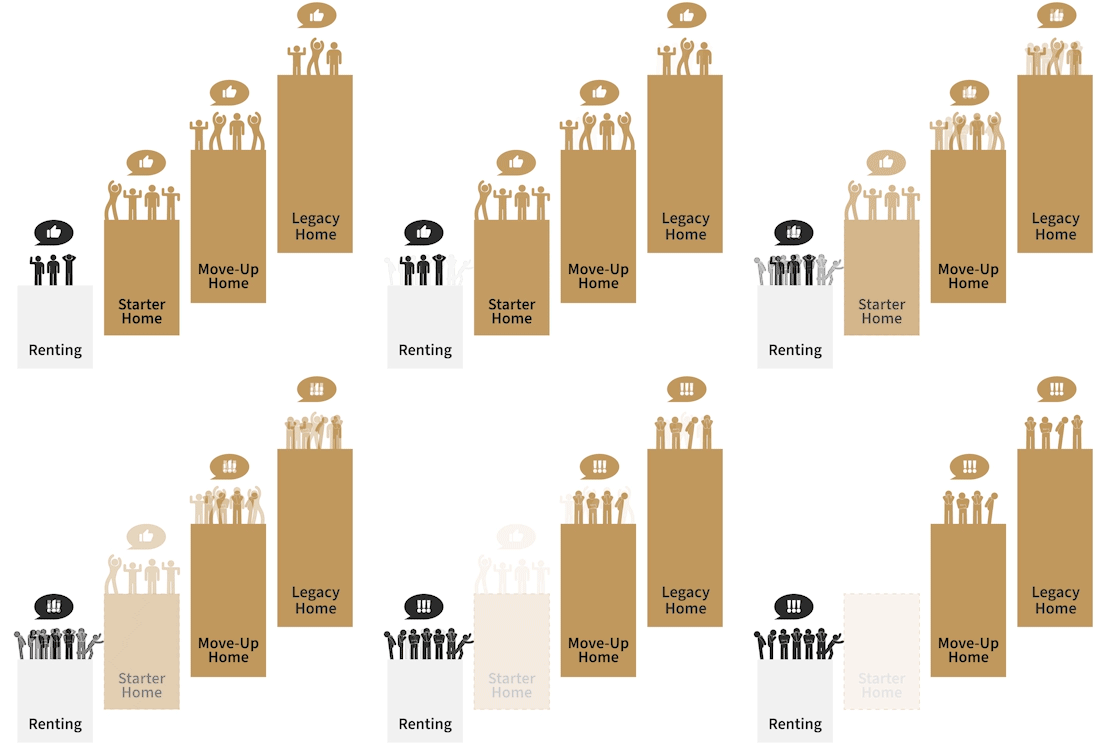
When starter homes become inaccessible, the ladder stops functioning.
Households remain renters longer than planned. Rent increases with inflation and demand to consume income that would otherwise become savings. Equity does not form. The move-up purchase becomes harder, and the entire system slows.
The impacts extend beyond the individual buyer:
This is not only an affordability story. It is a mobility story.
When the first rung breaks, every rung feels the impact.
The housing ladder is not just a life stage framework, but a price-structured system.
To better understand supply and demand dynamics, we divided all 2025 housing purchases into three price bands. These ranges reflect national averages; in practice, entry-level price points may be higher or lower depending on the local market.
Upper Band
$498,000 and above
Middle Band
$261,000 - $498,000k
Affordability band / starter segment
$261,000 and below
Across the segments, purchases were relatively evenly split:
Upper Band
32%
Middle Band
39%
Affordability band / starter segment
29%
But while activity is balanced, the inventory strain is not.
Sales Price
Total Sales
% of Total Sales
$498,000 and above
1,140,204
32%
$261,000 - $498,000
1,379,290
39%
$261,000 and below
1,033,749
29%

Price bands are a practical proxy for the housing ladder. When entry-level supply is constrained, the entire ladder stalls, suppressing step-up activity and restricting inventory circulation across all price segments.
The starter home affordability segment is the most sensitive segment of the housing market.
At the entry level, small changes in price, interest rates, or monthly payments can determine whether a household can buy at all. As affordability tightened over the past several years, these pressures became concentrated at the base of the housing ladder.
In this segment:
The result is a persistent barrier to entry, even when broader market conditions or headline inventory levels appear to improve.

According to Zillow’s national housing analysis, the U.S. housing shortage grew to an estimated 4.5 million homes in 2024, a deficit that contributes to ongoing affordability challenges as households compete for limited available inventory. Ironically, there are over 15 million vacant homes today.
As affordability worsens, public discussion tends to search for a simple explanation.
Institutional investors are frequently blamed for affordability challenges. But across the U.S. housing market, institutional investors represented only 1.4% of total purchases and many largely curtailed acquisitions of existing homes after 2022, shifting instead toward build-to-rent communities. They are not driving the nationwide shortage of starter homes.
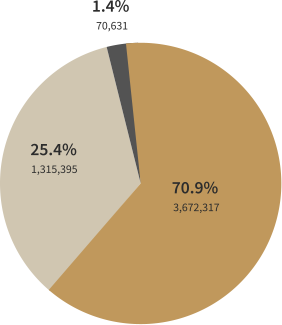
Homeowner Purchases
Small/Local Investors
Institutional Investors
This activity is not being driven by large institutional players. Most investors operate locally and at a small scale, often purchasing only one to five homes per year. Their market impact comes from repetition and specialization, not size or capital concentration.
These investors are not competing with homeowners. They are usually rehabbing and renovating blighted, dilapidated, and maintenance-deferred housing stock that would otherwise remain unusable and a safety risk to the community. Investors are returning these distressed properties to the affordable housing market in a much more efficient way than is possible with new construction.

Independent Investor
Typically part-time small-business operators focused on fix-and-flip activity.
Data reflects responses from 1,054 real estate investors surveyed in January 2026.
Scale
1-5 homes per year
Footprint
Buys within 30 minutes of home
Capital
Privately-funded
Price Point
Acquires under $250k
Rehab Spend
Typically under $100k
Timeline
4-6 months from rehab to resale
Builders are essential to housing supply. However, structural constraints limit their ability to solve the starter-home shortage at scale. New construction requires land acquisition, infrastructure development, utilities, permitting, and zoning approval — all of which add time, complexity, and cost before a home can even be built.
For years, not just in today’s high-cost environment, entry-level price points have been difficult to sustain within the economics of ground-up development. While fluctuations in labor or material costs may help at the margin, the broader development model has consistently concentrated new supply in higher price tiers where margins are more economically viable for them.
As a result, new construction activity concentrates in higher bands:
Sales Price
Total Sales
% of Total Sales
$498,000 and above
132,475
37.1%
$261,000 - $498,000
186,927
52.3%
$261,000 and below
37,931
10.6%
Most discussions of housing supply assume that net new inventory comes solely from new construction. In practice, inventory is also created through the revitalization of existing homes that are vacant, blighted, or functionally obsolete by local real estate investors.
These homes already exist within established communities. They do not require new land, infrastructure, zoning changes, or lengthy permitting timelines.
When revitalized, this housing stock can return to market far more quickly than new construction can be built, making it a critical source of attainable inventory at the base of the housing ladder.
In 2025, independent investors delivered the majority of new inventory to the entry band.
Sales Price
New Builds
Flips
$261,000 and below
37,931
120,193
Unlike builders, investors also concentrate most of their activity in the starter segment. This is where affordable housing is being created.
Through the acquisition, renovation, and resale of deteriorated homes, local investors are delivering more starter homes than builders.
This force is driving a large-scale shift in how affordable, entry-level housing is supplied. This is the Great Renovation.
This shift becomes even more pronounced as affordability tightens. When housing supply is analyzed across finer price segments, investors account for a staggering share of new inventory at lower price points. In 2025, independent investors supplied 83.75% of new inventory in the sub-$215K band, 415% more than builders, and 69.5% of new inventory in the under-$250K band, 127.9% more than builders.
This is not marginal participation. It represents foundational supply at the base of the housing ladder. As affordability constraints deepen, the role of revitalization-driven inventory becomes increasingly central to how entry-level housing is created.
The national pattern is not theoretical — it is visible across diverse markets, price points, and regions. In city after city, revitalization-driven inventory is outpacing new construction in the starter band:

(>$180K)
Across markets with vastly different price ceilings, revitalization consistently delivers more attainable housing than new construction at the entry level — not as a niche activity, but as a primary source of supply.
Most consumers experience the housing market through traditional listings: turnkey homes, MLS inventory, and Zillow-ready supply. But there is another parallel market operating alongside it, one that is often absent from publicly reported numbers.
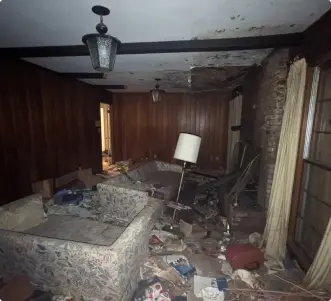
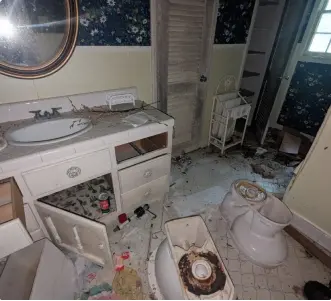
Decades of structural disruption, compounded by post-2008 dynamics, have left a significant portion of U.S. housing stock deteriorated, blighted, vacant, or unsafe for occupancy. In their current condition, these homes are not move-in ready, and require levels of rehabilitation beyond the capacity or risk tolerance of most traditional buyers.
In 2025, investors purchased more than 1.3 million homes nationally, with over 72% of revitalized homes originating off-market because these properties could not sell as-is through traditional retail channels. The MLS is not designed to efficiently match deficient housing supply with buyers capable of complex rehabilitation, making a specialized off-market ecosystem a necessity rather than an alternative.
Because these transactions begin outside traditional retail channels, they are not fully captured in commonly cited housing metrics. This is not a reporting failure, but a structural reality: distressed housing must first be acquired and revitalized before it can re-enter the market through standard real estate pathways. As a result, a meaningful segment of housing activity — and inventory creation — is routinely overlooked in the data that shapes affordability analysis and policy discussions.
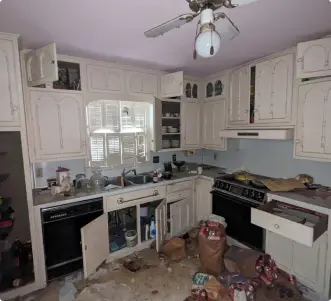
These homes often require extensive work to meet basic living and safety standards, including major plumbing, electrical, or foundation repairs; pest or mold remediation; and significant interior reconfiguration. Most homebuyers cannot or will not purchase properties in this condition, or cannot fund the scope of repairs alongside acquisition.
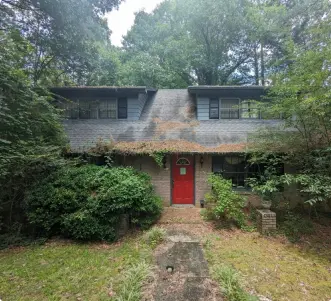
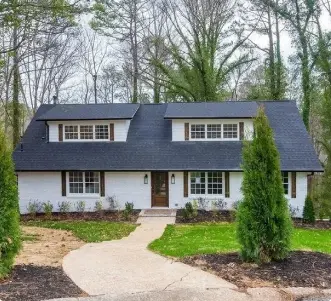
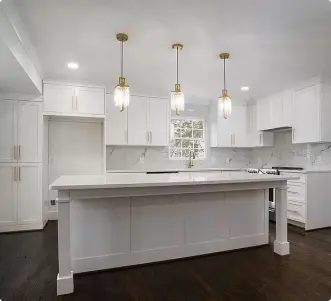
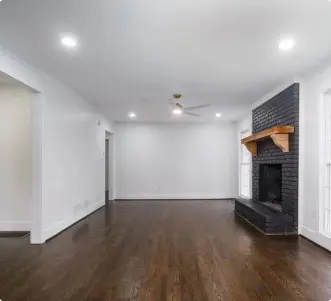
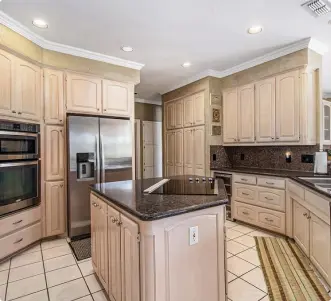
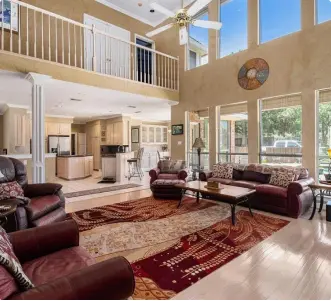
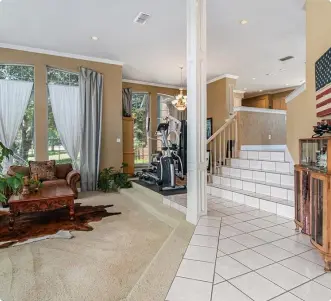
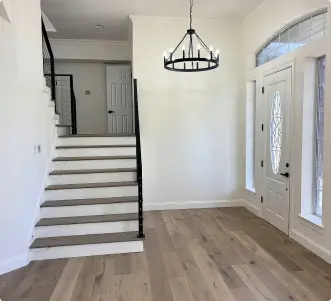
Revitalization turns these properties into:
This is the conversion of distressed housing stock into attainable and affordable inventory. Investors do not compete with homebuyers for turnkey homes. They restore underutilized housing stock and return it to the market as livable, affordable options for families at the entry point of the housing ladder.

Mountain Brook, Alabama

Flower Mound, Texas




Lincolnton, North Carolina
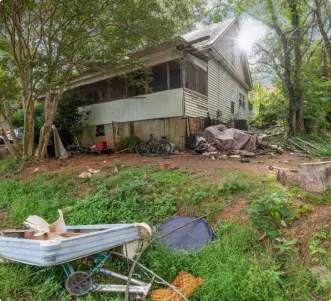
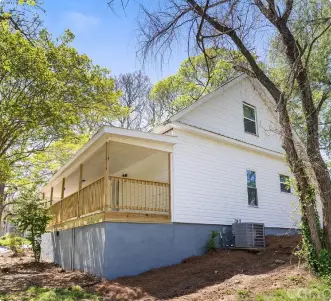


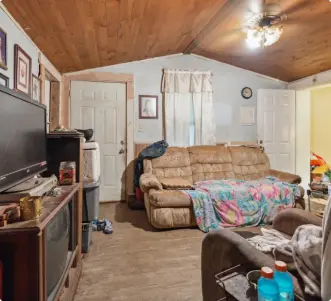



Revitalization does not divert activity from the traditional housing market. It creates activity that would not otherwise exist.
Each revitalized home represents a conversion of distressed or obsolete housing stock into finished inventory that can support a retail transaction. Without revitalization, these homes would remain vacant, deteriorate further, or exit the housing system entirely.
This process generates meaningful downstream economic activity, including:
In 2025, investor activity generated over $20.9 billion in listing agent commissions. These transactions are additive, not competitive, and expand the functioning housing ecosystem. Without local investors, these properties would not reach the MLS as viable listings or become accessible options for buyers.
The data throughout this report points to a fundamental shift in housing supply.
Together, these forces define the Great Renovation. A market-driven system in which distressed homes are revitalized and returned to the market as attainable housing, rebuilding the first rung of the housing ladder.
This is not a temporary trend. It is a structural response to how housing stock, construction economics, and affordability intersect today.
Housing markets do not function in isolation from communities. When entry-level homes disappear, the effects extend far beyond prices and transactions.
Starter homes are the gateway to homeownership. When that gateway closes, households remain renters longer, mobility slows, and neighborhoods experience higher turnover, reduced stability, and declining long-term investment.
By restoring distressed and vacant properties into livable starter homes, revitalization reopens that gateway. It enables first-time buyers to enter the housing ladder, begin building equity, and establish roots in their communities.
At the neighborhood level, revitalized homes help reverse the effects of prolonged vacancy and disinvestment by:
The impact compounds over time. Homeownership fosters stability, pride of place, and participation in the broader civic and economic life of a community.
Revitalization does not just change individual properties. It helps restore the conditions required for healthy, functioning neighborhoods.
You may start to think that revitalization is limited by a finite supply of homes in need of revitalization.
In reality:
Housing policy and public perception have not fully caught up with how starter-home supply is being created.
Efforts to restrict revitalization activity risk reducing one of the most effective sources of attainable inventory. Conversely, policies that support revitalization can expand supply without requiring new land, zoning reform, or long development timelines.
The takeaway is not that revitalization replaces building. It is that it fills the most constrained gap in the market.
Investors should be recognized as housing providers in the use cases where they supply affordable inventory.
Starter homes are not just housing units. They are gateways to a brighter future.
They enable equity. They rid urban blight. They create mobility. They stabilize communities. They keep the housing ladder functioning.
In 2025, the data showed a measurable shift. Local investors became the largest source of affordable inventory in the most constrained segment of the market: starter homes. By restoring properties that would otherwise remain unusable, they outpaced builders in delivering inventory to the affordability band.
If this work accelerates, the implications for affordability and upward mobility are significant.
The trajectory of the housing market will be shaped by how well its underlying mechanics are understood. Different segments of the market operate under different constraints, and no single solution addresses them all.
At the entry level, local independent investors have emerged as a primary source of new supply. Policies and market structures that recognize and support this role can help accelerate the return of attainable housing to market and relieve pressure at the base of the housing ladder.
What appears in the 2026 data will reflect whether this segment is enabled or constrained. Supporting revitalization means accelerating the return of attainable housing, restoring mobility at the base of the market, and strengthening the foundation of the American housing system. The opportunity is already there — the question is whether policy and perception will allow it to scale.
Vacancy data was obtained from Census.gov, which aggregates data from the U.S. Census Bureau. Data on homes in need of repair was sourced from a Harvard Joint Center for Housing Studies (JCHS) analysis utilizing tabulations of the U.S. Department of Housing and Urban Development’s American Housing Survey. Housing shortage estimates were sourced from Zillow research.
New construction sales are identified using proprietary methods that distinguish between different stages of the construction lifecycle. While third-party sources may include transactions occurring prior to completion or during construction, this report includes only transactions in which full ownership of a completed new home transfers to a buyer. This methodology ensures consistency when comparing new construction sales with renovated home resales, which are likewise measured at the point of completed, deeded ownership transfer.
Revitalization transactions, or “flips,” are identified using proprietary algorithms designed to detect acquisition, renovation, and resale activity patterns across public deed records.
The data presented in this report reflects transaction activity across more than 35 U.S. markets in which New Western operates and closely tracks housing activity. These markets include many of the nation’s largest and most active real estate metros and represent a significant share of residential transaction volume. While the findings are not intended to represent every market nationally, they provide a robust view of housing dynamics in high-activity markets where affordability pressures are most pronounced.
New Western is the nation’s largest home buyer and a real estate investment marketplace that connects over 250,000 local investors with the largest private source of value-add residential properties in the country. The company buys and sells a home every 13 minutes across major U.S. markets, helping sellers move on quickly while creating new, affordable housing inventory through renovation. New Western has earned multiple Glassdoor Employees’ Choice Awards as one of the Best Places to Work in the U.S. Learn more at www.newwestern.com and explore careers a www.newwestern.com/careers.

The National Association for Housing Revitalization (NAHR) is the unified voice of the housing revitalization industry, advancing housing policy, professional standards, and collaboration to return aged, distressed, and vacant homes to the market as attainable housing to strengthen America’s housing inventory.
New Western is a licensed real estate brokerage that provides investors access to its marketplace of investment properties. The information provided within this material does not and is not intended to constitute legal, financial, tax, or real estate investing advice. New Western represents the seller in any resulting transaction and is not acting as an agent of the investor or any potential buyer in any resulting real estate transaction. The content published herein is provided “as-is” for informational purposes only. No representations are made that the content is error-free, and New Western does not make any representations or warranties as to the effectiveness of any investment strategy. This material does not create any warranty, contractual obligation, or agency relationship between any investor or potential buyer and New Western. New Western does not and cannot guarantee the accuracy of any information that was prepared by an unaffiliated third party. Buying real estate and engaging in real estate transactions involves varying degrees of risk, and investors and potential buyers should educate themselves on the potential risks by consulting their own advisors. Engaging in conversations with any New Western personnel does not constitute or replace the receipt of personalized advice from a professional engaged by the recipient of this material.